Collective Nouns Usage-Special Grammar Case-4
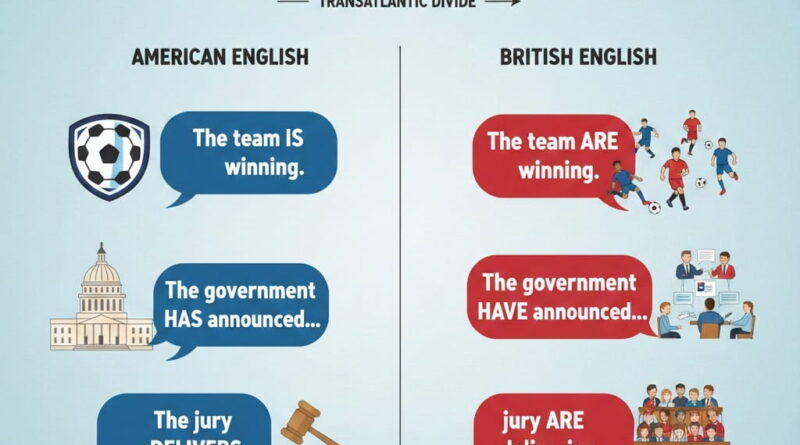
Collective Nouns in American and British English Introduction Collective nouns refer to a group of people, animals, or things, treated
Read More
Every Grammar Rule, Clearly Solved
Every Grammar Rule, Clearly Solved
Special Grammar Cases in English – Explained with Examples
Grammar rules usually follow patterns, but English often breaks its own rules. These exceptions are known as special grammar cases, and mastering them is key to using the language accurately and confidently. In this article, we’ll explore some of the most common special grammar cases in English with clear examples and usage tips.
1. Irregular Verbs That Confuse Learners
Not all verbs form the past tense by simply adding –ed. Some verbs change completely. For example:
Go → went → gone
Buy → bought → bought
Lie (to rest) → lay → lain
These verbs don’t follow standard patterns and must be memorized. This makes them a common special grammar case for learners of all levels.
2. Who vs Whom
This case confuses even native speakers. The rule is simple:
Use who as the subject: Who called you?
Use whom as the object: Whom did you meet?
Though “whom” is less common in speech, it remains correct in formal writing.
3. Subject-Verb Agreement with Collective Nouns
Collective nouns like team, jury, or family can take singular or plural verbs depending on context:
The team is winning (as one unit).
The team are arguing (individual members acting separately).
This special case depends on the meaning, not just the word form.
4. Conditionals with Mixed Tenses
Consider this example:
If I had studied, I would be passing now.
This sentence mixes the past perfect and present conditional, showing an action in the past affecting the present. Mixed conditionals are advanced but essential for fluent expression.
5. Double Negatives (Don’t Use Them!)
While used for emphasis in some dialects, double negatives are considered incorrect in standard English:
❌ I don’t know nothing.
✅ I don’t know anything.
Avoiding them is part of using English professionally and clearly.
Final Thoughts
Special grammar cases in English challenge both new learners and experienced users. However, with constant exposure, example-based learning, and practice, these tricky rules become easier. Mastering them enhances both writing and speaking skills.
Collective Nouns in American and British English Introduction Collective nouns refer to a group of people, animals, or things, treated
Read MoreIntroduction to Modifiers in Grammar Modifiers are words, phrases, or clauses that provide description or additional detail in a sentence.
Read MoreEnglish often surprises learners with multiple expressions that seem similar but convey subtle differences. One such trio includes have tea,
Read MoreInferred Meaning and Examples with Types Explained Meaning of Inferred: The word “inferred” is the past tense of the verb
Read More