
Errors in the Use of Nouns (4)-GPS-52
Errors in the Use of Nouns (4)-Grammar Puzzle Solved-52
Errors in the Use of Nouns (4)-Rule No. 16
Use of Singular and Plural Possessives
One of the most common mistakes in English, therefore, involves the use of singular and plural possessives. In fact, writers often confuse the placement of the apostrophe, and consequently, this mistake changes the meaning of the entire sentence. Moreover, a correct understanding is essential because otherwise, incorrect possessives make writing unclear, misleading, and even confusing.
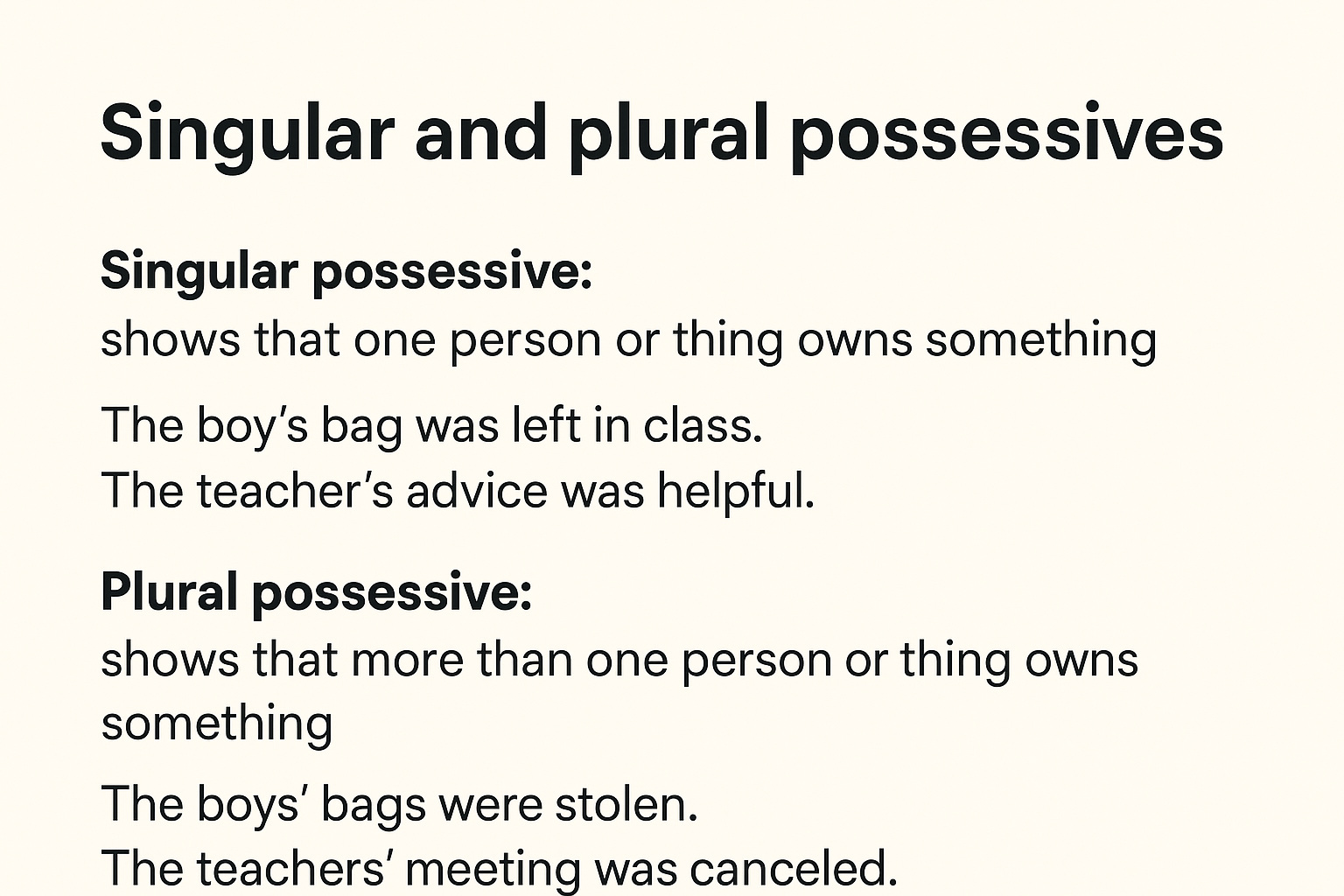
To begin, a singular possessive shows that one person or thing owns something. We form it by adding ’s to the noun. For example:
- The boy’s bag was left in class. (One boy, his bag)
- The teacher’s advice was helpful. (One teacher, her advice)
- The child’s toy broke. (One child, one toy)
On the other hand, a plural possessive clearly shows that more than one person or thing owns something. In most cases, therefore, we simply add an apostrophe after the s. Moreover, this rule applies consistently to regular plurals, making usage easier to remember. Examples include:
- The boys’ bags were stolen. (Many boys, their bags)
- The teachers’ meeting was canceled. (Many teachers, their meeting)
- The children’s playground is new. (Special case: children is already plural, so we add ’s)
The confusion often arises because the singular and plural possessives look very similar. Consider these examples:
- The girl’s dresses were beautiful. (One girl, her dresses)
- The girls’ dresses were beautiful. (Many girls, their dresses)
- The man’s house was large. (One man, his house)
- The men’s house was large. (Many men, their house)
Notice, therefore, how the tiny apostrophe placement immediately changes ownership from one person to many. Furthermore, another tricky case often arises with irregular plurals. For example, in several situations, learners confuse forms like goose’s and geese’s, which require careful attention.
- The goose’s wings were injured. (One goose)
- The geese’s wings were injured. (Many geese)
In addition, writers also make errors with family names. For instance, look at these examples that highlight the difference between singular and plural possessives.
- Smith’s car is red. (One Smith, his or her car)
- The Smiths’ car is red. (The family named Smith, their car)
- Jones’s garden is lovely. (One person named Jones, his or her garden)
- The Joneses’ garden is lovely. (The Jones family, their garden)
We also see problems in academic writing. For instance:
- The student’s success impressed the teacher. (One student)
- The students’ success impressed the teacher. (Many students)
Thus, students should carefully practice distinguishing singular and plural possessives. Reading sentences aloud sometimes helps because the ear notices differences in meaning even when the eye overlooks apostrophes. Always check whether the owner is one or many. This habit prevents confusion, ensures accuracy, and improves clarity in both spoken and written English.
Errors in the Use of Nouns(3): https://grammarpuzzlesolved.englishlitnotes.com/errors-in-the-use-of-nouns-3/
For grammar lessons, visit ChatGPT to explore the platform and interact with the AI: https://chat.openai.com
Discover more from Grammar Puzzle Solved by Naeem Ullah Butt
Subscribe to get the latest posts sent to your email.